From Final Bundle to Google Play Closed Testing: How Smart Employee Android Prepared for Release
A successful build was not the finish line. Testing the real release bundle exposed two hidden reliability issues before Smart Employee Android entered Google Play closed testing.

A successful build was not the finish line. Testing the actual release bundle exposed two hidden problems, and Google Play closed testing made the boundary between technical readiness and public availability much clearer.
First, what is Smart Employee Android?
Smart Employee Android is a TekeraLab application being developed to help manage parts of a user’s everyday work and reminders on their phone. For a product like this, a missed notification or lost schedule is not merely a technical defect: the user may forget the task they trusted the app to remember.
That is why preparing for Google Play means more than creating an installable file. The version delivered to testers must be the real store bundle, and it must remain dependable after a clean installation, a device restart, and an app update.
Why was a successful build not enough?
A successful build only proves that the toolchain produced a package. It does not prove that the package contains the latest behavior, that no unnecessary file slipped into it, or that reminders survive real lifecycle events.
The candidate bundle was compared with the current release output. The final version was then installed cleanly and its main user paths were tested. This closed the gap between “the code builds” and “the package we will distribute behaves as intended.”
Two hidden issues found near release
Testing the real package revealed two important defects. First, some schedules could disappear after the phone restarted or the app was updated. For a product built around timely reminders, that directly damages trust.
Second, a readable backup file did not belong in the release package. Both problems were corrected and the relevant tests were repeated on the final bundle. The lesson was simple: test what will actually be distributed, not only what appears to work in the development environment.
What does Google Play closed testing prove?
Closed testing distributes the app to a limited group of accepted testers. Installing from Google Play allows the team to inspect the same delivery chain that a future user will follow: store distribution, installation, and use of the exact package supplied by the platform.
For Smart Employee Android, a test release became active and installation through the store was checked. The dashboard’s minimum tester count was reached, but this was still not a public launch. Closed testing is a controlled environment for finding problems before the product reaches everyone.
Smart Publisher for Android, another TekeraLab app, went through the same Play Console steps. We described them in what Smart Publisher needed before Google Play closed testing.
Why are we not calling it publicly released?
Google Play requires not only a minimum tester count but also a continuous testing period. When this report was recorded, the tester requirement had been met while the required period was still in progress. The accurate statement is therefore that Smart Employee Android entered closed testing—not that it became publicly available.
That distinction matters. A progress report should say exactly what was built, what was tested, and what condition remains. Excitement is not evidence, and a promise should not move ahead of the product.
What does this work give the user?
Users do not normally see the build bundle or store configuration, but they experience the result. Schedules should not vanish after an update, the release should not contain unnecessary files, and the store version should match the behavior the team tested.
Closed testing is the opportunity to examine those promises through real use before a public launch. The purpose is not merely to complete a Google Play checklist. It is to reduce the chance that the first public users discover a reliability problem the team could have found earlier.
Smart Employee Android has moved beyond creating a bundle and into Google Play closed testing, but it is not publicly available yet. The value of this stage is not the dashboard number. It is the chance to test the real distributed version under more realistic conditions and fix trust-breaking problems before a wider release.
Ask a question
Got a question about this post? Drop your email and we’ll reply.
Get notified of new posts
1–2 emails a month on social media, AI and running a small business. No spam.
Related posts
Why Smart Publisher Needed Privacy and a Stable Technical Identity Before Google Play
Before Smart Publisher entered Google Play testing, we aligned its privacy page, permanent Android identity, and product history with what the app actually does.
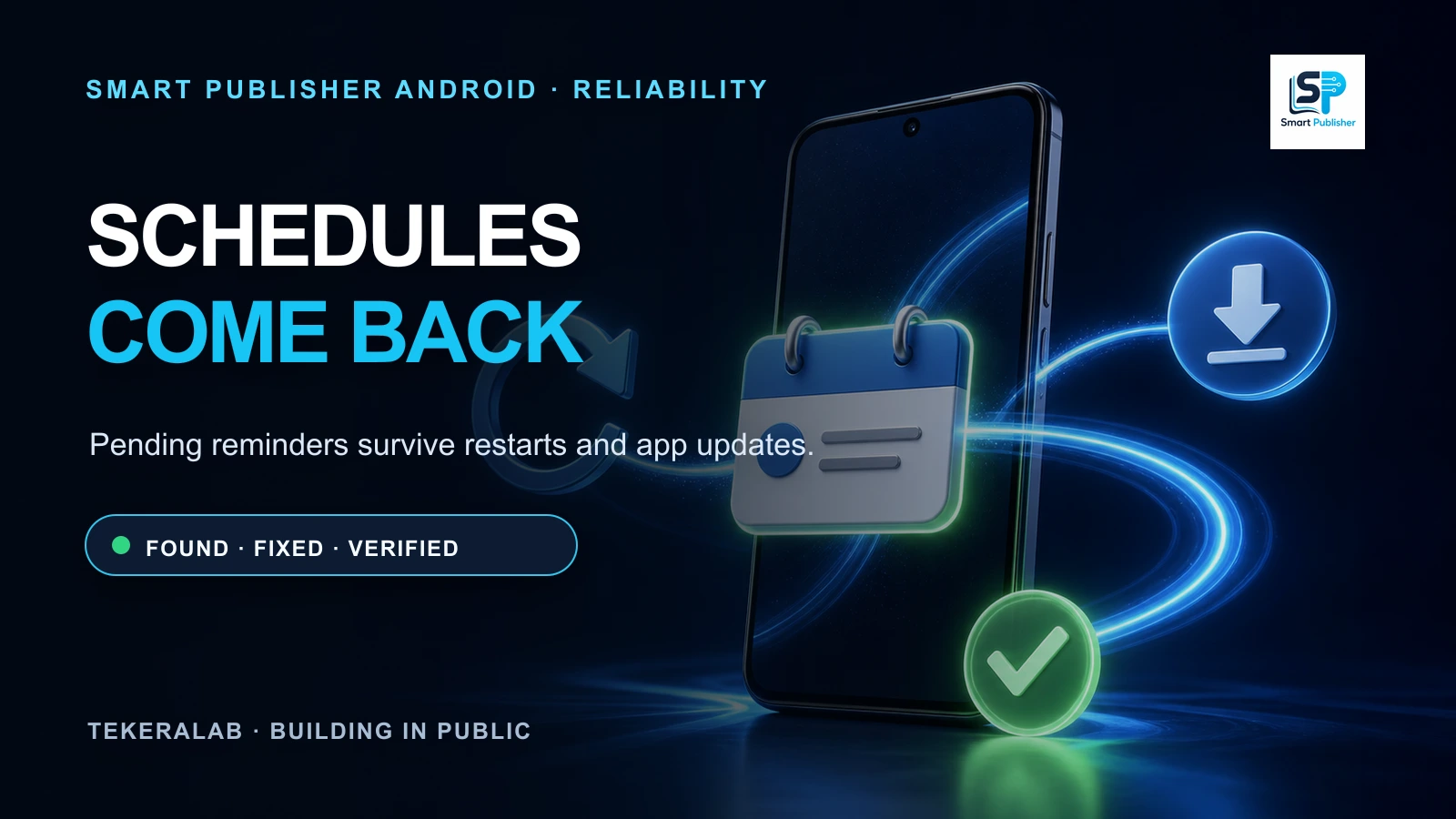
Smart Publisher Schedules Now Survive Phone Restarts and App Updates
Testing the real Google Play bundle exposed a reliability issue: pending schedules could disappear after a restart or update. The fix is implemented and verified.
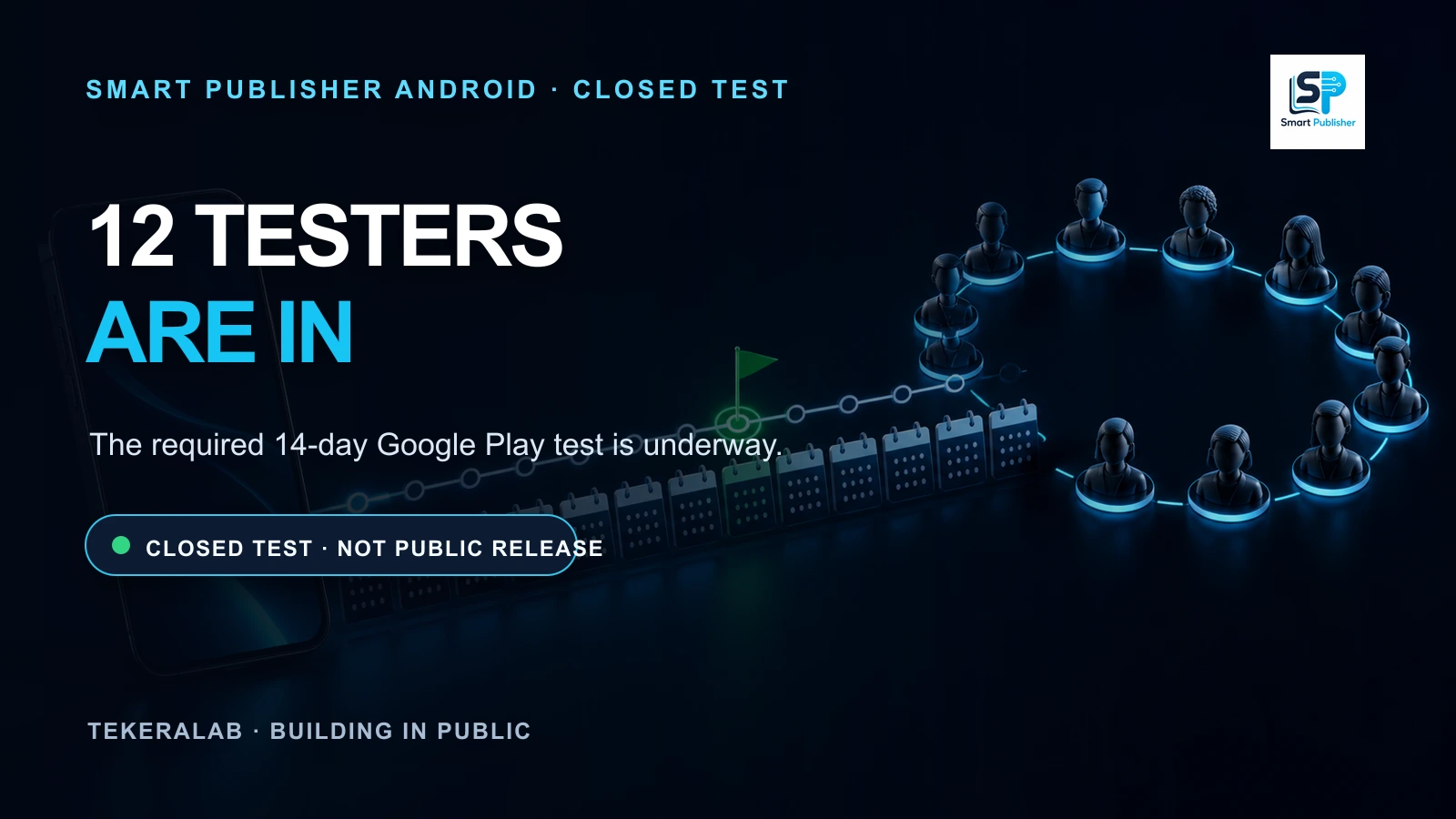
Smart Publisher Android Begins Its 14-Day Google Play Closed Test
Twelve testers are now opted in to Smart Publisher Android’s closed test. The required 14-day Google Play testing period is underway.