What Smart Publisher Still Needs Before Google Play Closed Testing
Smart Publisher has a build in Play Console, but closed testing has not started. Here is what is ready, what remains, and why a build is not a release.
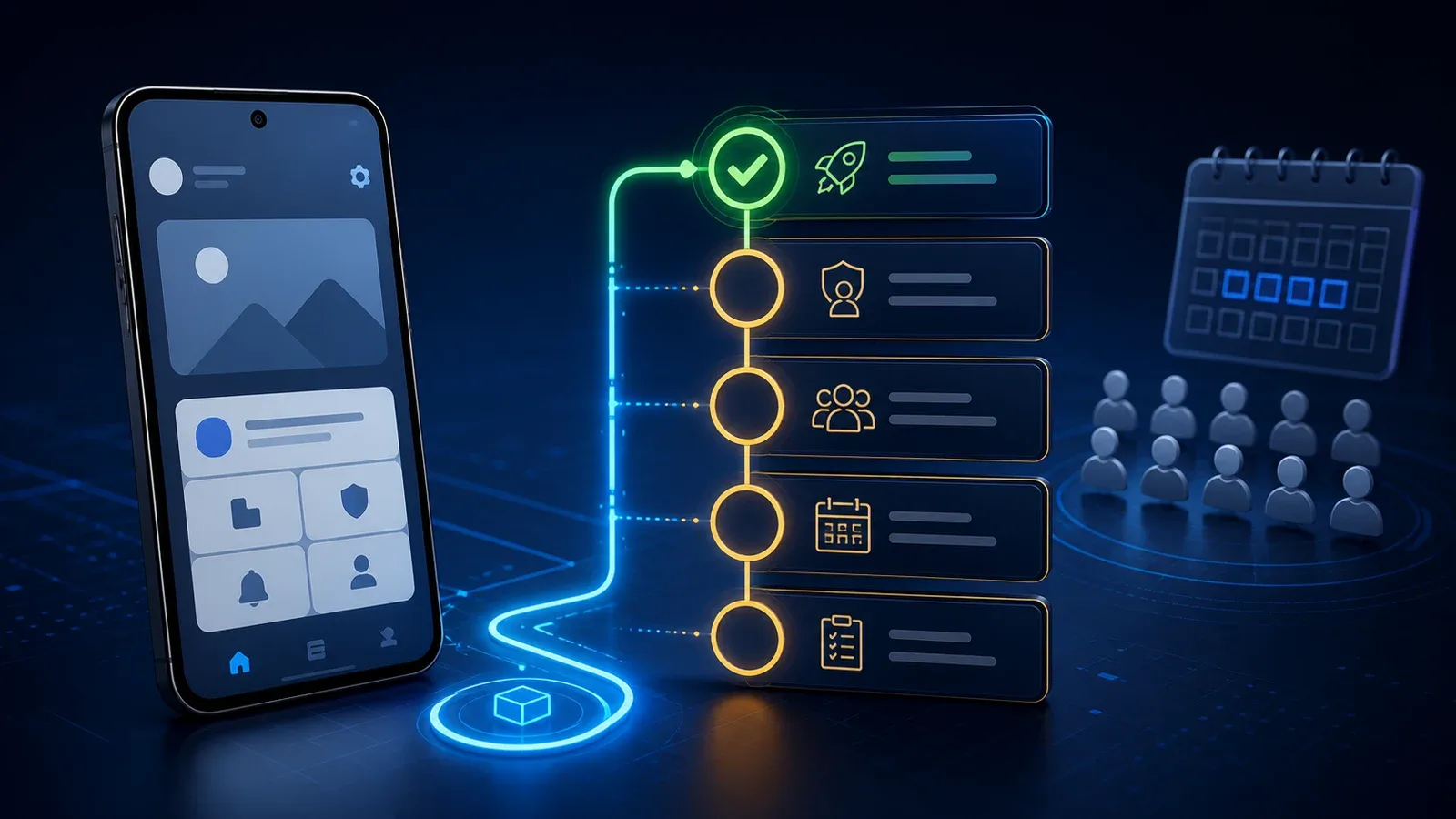
Smart Publisher for Android has a build in Google Play Console, but that does not mean closed testing has started or that the app is publicly released.
This article records the live status we verified and the work that still remains.
What Smart Publisher for Android does
Smart Publisher for Android helps a user prepare an Instagram post by selecting media, writing a caption and choosing a reminder time. When the reminder arrives, the app opens the prepared handoff to Instagram. The user reviews the result and taps Share.
The current Android version does not require the user to connect a Meta account, and it does not silently publish on the user’s behalf.
The verified Play Console status
On 26 August 2026, the Smart Publisher app was visible in Play Console as a draft in Internal testing.
The closed-testing setup showed:
- 1 of 5 setup steps completed;
- 0 testers opted in;
- no closed-test release available to testers;
- production access inactive.
This is evidence that a build exists in the console. It is not evidence of a completed test or a public release.
What must happen before closed testing is real
The remaining work is operational, not just a checkbox:
- choose the countries or regions for the test;
- define the tester list or Google Group;
- create and submit a closed-test release;
- complete Google Play review;
- enroll enough real testers.
For new personal Play Console accounts, Google currently requires at least 12 testers to remain opted in for 14 continuous days before production access can be requested.
Why a build is not enough
A useful closed test must prove the actual installation path from Google Play. Testers need to install the Play-delivered build and verify reminders, media permissions and the final Instagram handoff.
The same applies to purchases. Billing code and product configuration may exist, but that is not live evidence of a working purchase until the Play-installed test build completes a real test transaction.
What we will verify next
The next checkpoint is not “the code compiled.” It is:
- the closed-test release is available through Play;
- testers can opt in and install it;
- reminders arrive at the intended time;
- denied permissions have a clear recovery path;
- the final Share action remains under the user’s control;
- Billing works from the Play-installed build.
Until those checks are complete, Smart Publisher for Android should be described as preparing for closed testing—not as released or ready for production.

Ask a question
Got a question about this post? Drop your email and we’ll reply.
Get notified of new posts
1–2 emails a month on social media, AI and running a small business. No spam.
Related posts
Why Smart Publisher Needed Privacy and a Stable Technical Identity Before Google Play
Before Smart Publisher entered Google Play testing, we aligned its privacy page, permanent Android identity, and product history with what the app actually does.
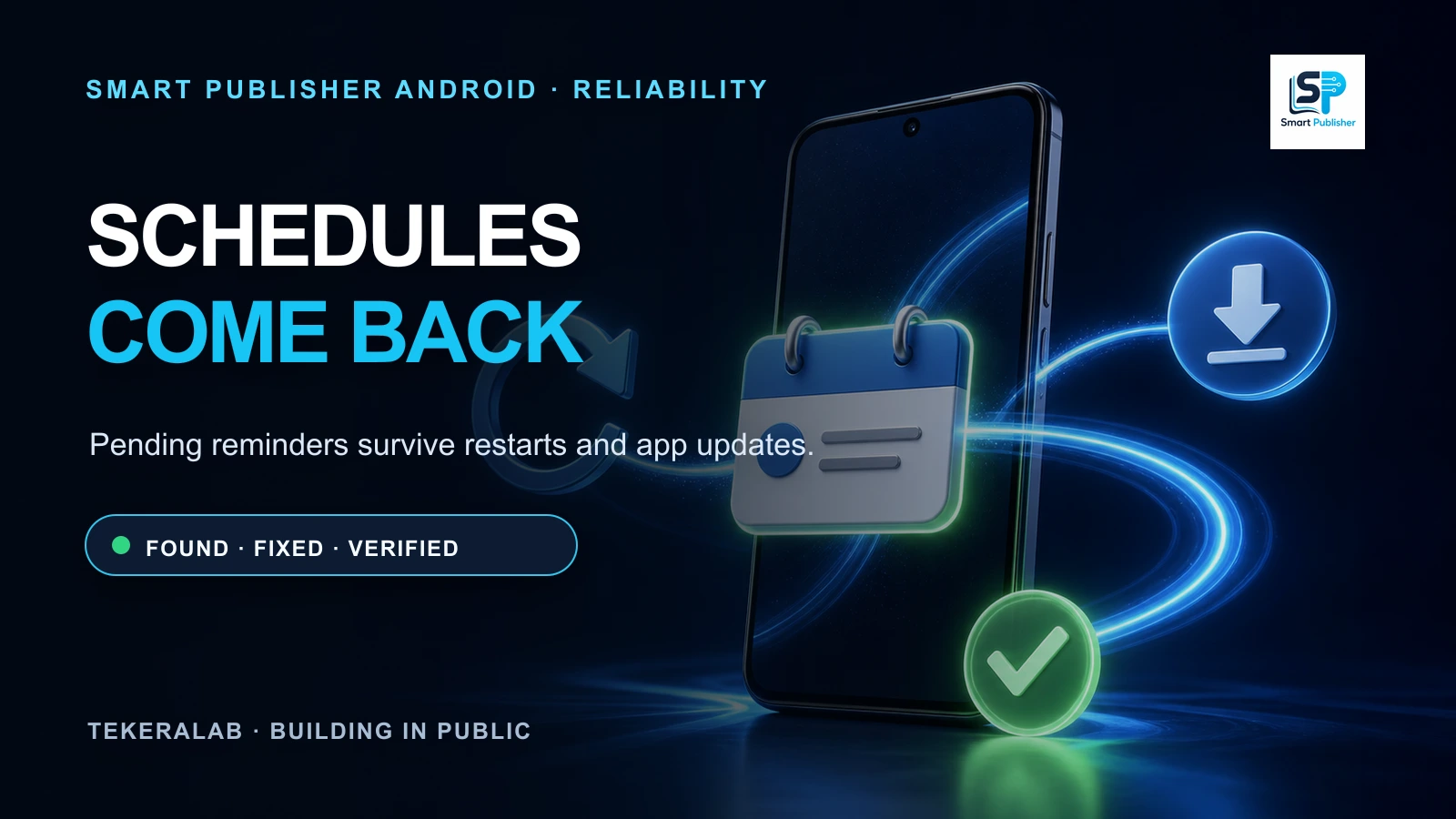
Smart Publisher Schedules Now Survive Phone Restarts and App Updates
Testing the real Google Play bundle exposed a reliability issue: pending schedules could disappear after a restart or update. The fix is implemented and verified.
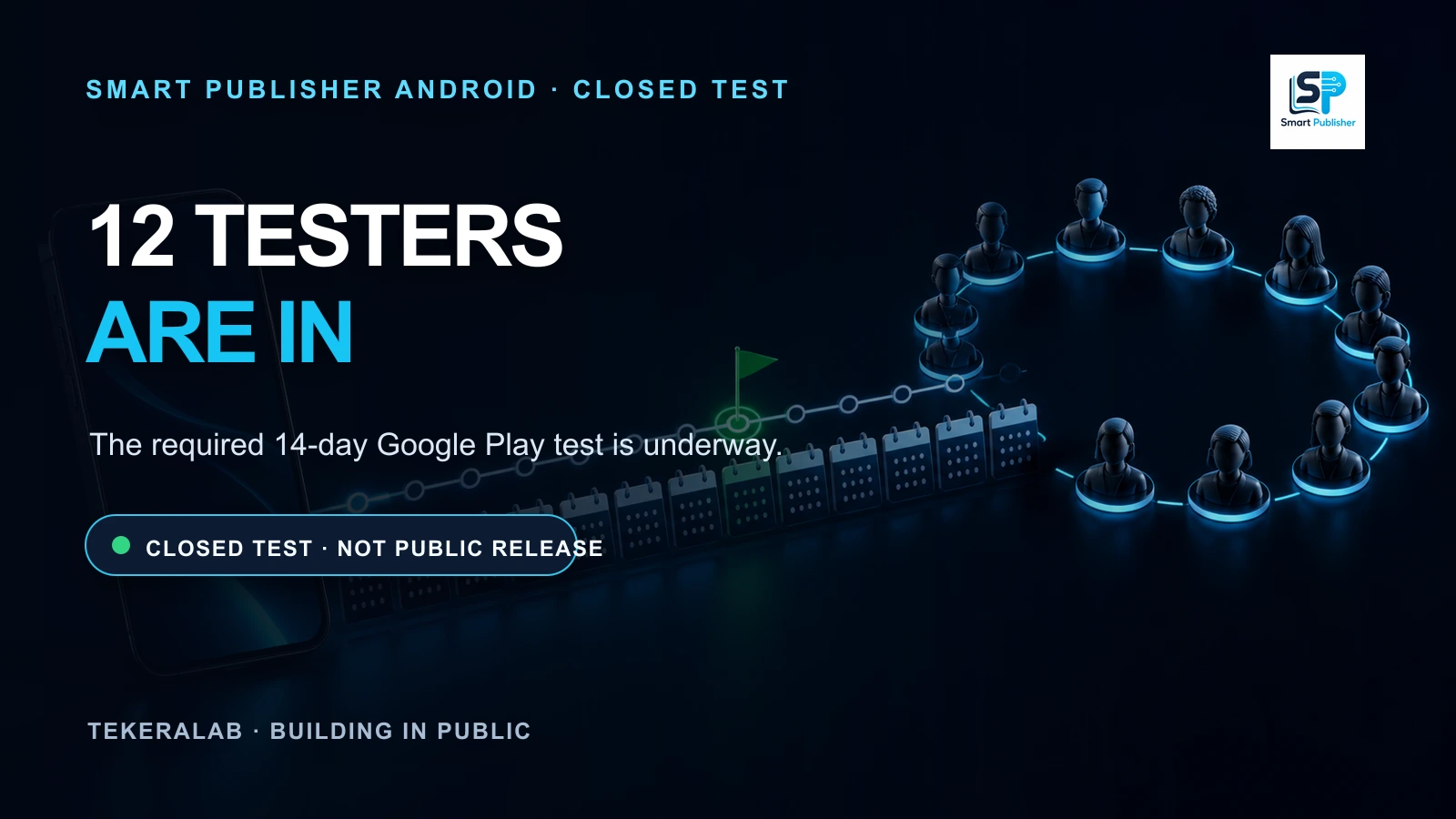
Smart Publisher Android Begins Its 14-Day Google Play Closed Test
Twelve testers are now opted in to Smart Publisher Android’s closed test. The required 14-day Google Play testing period is underway.