How Smart Publisher Makes Free Posts, Trials, and Subscriptions Clear
A trustworthy subscription starts before checkout: visible free usage, an honest trial, local pricing, and safe failure paths.
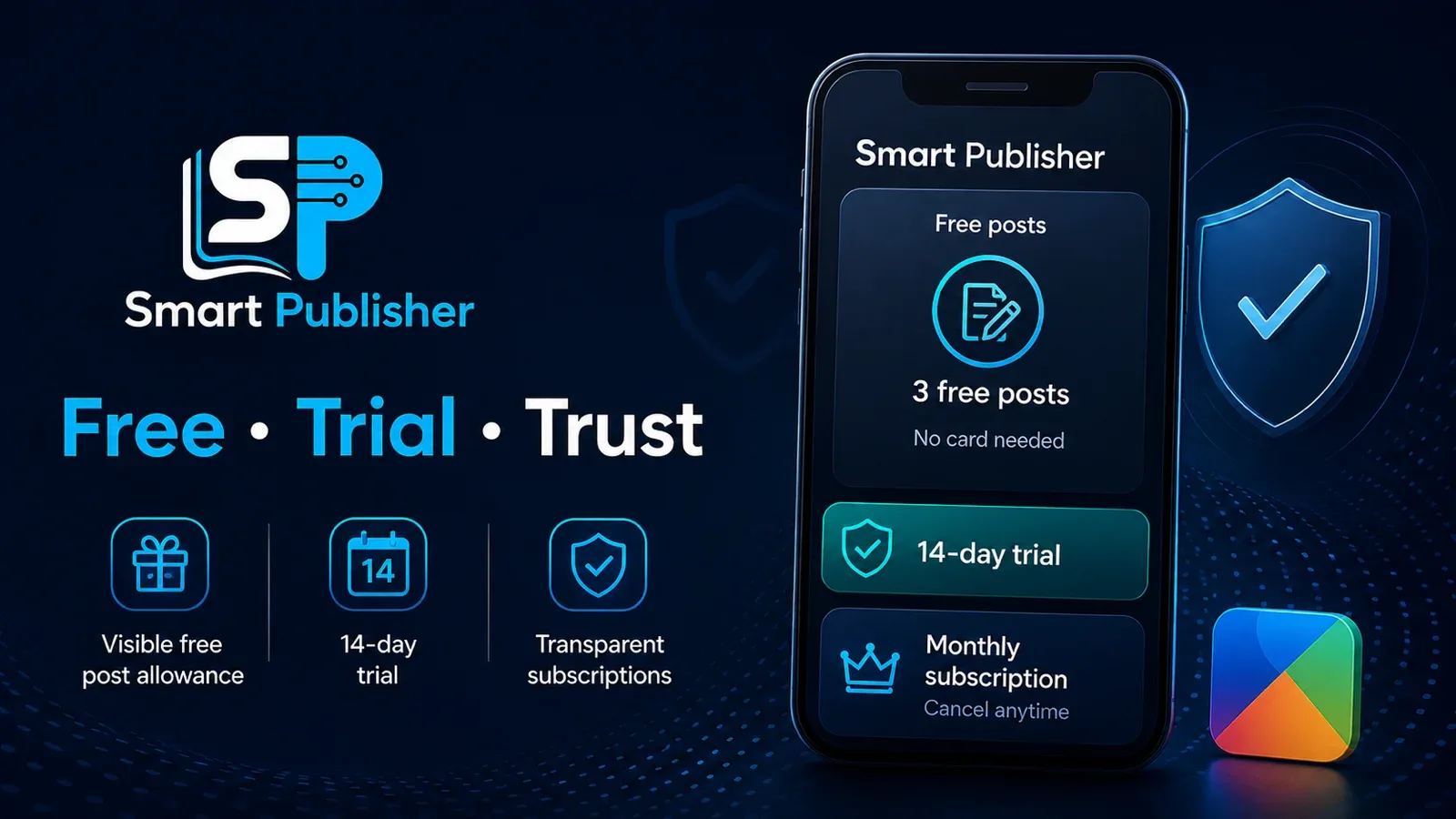
A subscription screen is often treated as a sales page. In practice, it is also a trust test. If a limit appears without warning, the trial is vague, or the price shown in the app disagrees with the store, users do not see a billing detail—they see uncertainty.
For the Smart Publisher Android app, we designed the free allowance, trial, and monthly plan as one experience rather than three unrelated settings.
Three free posts should be visible
Smart Publisher lets a new user prepare the first three scheduled posts without a card. The remaining allowance appears in the app header, so the limit is visible before it becomes a surprise.
The counter also should not restart simply because the app is removed and installed again. We moved that state to a more durable Android storage path and tested the uninstall-and-reinstall behavior. This makes the free boundary predictable for both the user and the product.
A trial needs a real duration
Google Play can return subscription periods in formats such as P2W. An early parser understood days but not weeks, so a 14-day offer could appear only as “Free trial.” The billing display now converts the store response into a clear duration.
On 22 August 2026, we checked the live Play Console configuration again: the monthly base plan and the 14-day trial offer were active across 174 countries and regions. Smart Publisher remains in internal testing at the time of publication, so production availability may change.
The store is the source of truth for price
We deliberately do not hard-code a single price in this article. Google Play displays the current local price, tax treatment, and currency for each region. The app reads the offer returned by Play, while the user completes and manages the subscription through the store.
That separation matters. A blog post can become outdated; the checkout screen must not.
Failure paths are part of the product
Not every Android device has a working Google Play service. A billing error should not leave the entire app unusable without explanation. The app now keeps a safe path available while clearly separating free usage from subscriber access.
Purchase testing has a similar rule: we do not press a real purchase button until the test account and license-testing setup are confirmed. Avoiding an accidental charge is not a delay—it is part of responsible release work.
What users should expect
The current Android experience is simple: three free posts, a clearly labeled 14-day trial for eligible new customers, regional pricing supplied by Google Play, and subscription management through the store.
Learn what Smart Publisher for Android does before the final Instagram handoff.
A healthy subscription does not pressure users into a decision. It gives them enough information to make one.

Ask a question
Got a question about this post? Drop your email and we’ll reply.
Get notified of new posts
1–2 emails a month on social media, AI and running a small business. No spam.
Related posts
Why Smart Publisher Needed Privacy and a Stable Technical Identity Before Google Play
Before Smart Publisher entered Google Play testing, we aligned its privacy page, permanent Android identity, and product history with what the app actually does.
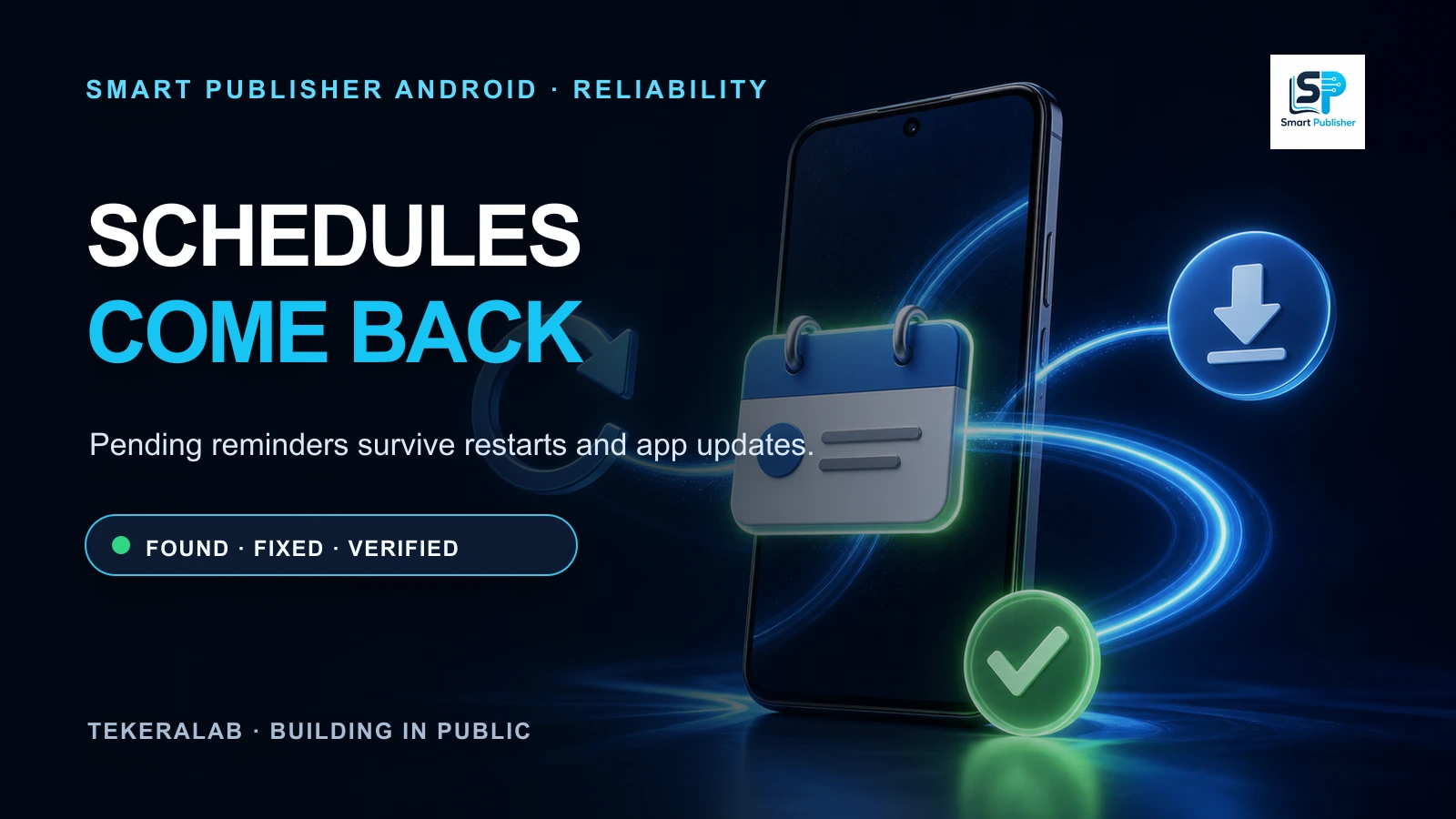
Smart Publisher Schedules Now Survive Phone Restarts and App Updates
Testing the real Google Play bundle exposed a reliability issue: pending schedules could disappear after a restart or update. The fix is implemented and verified.
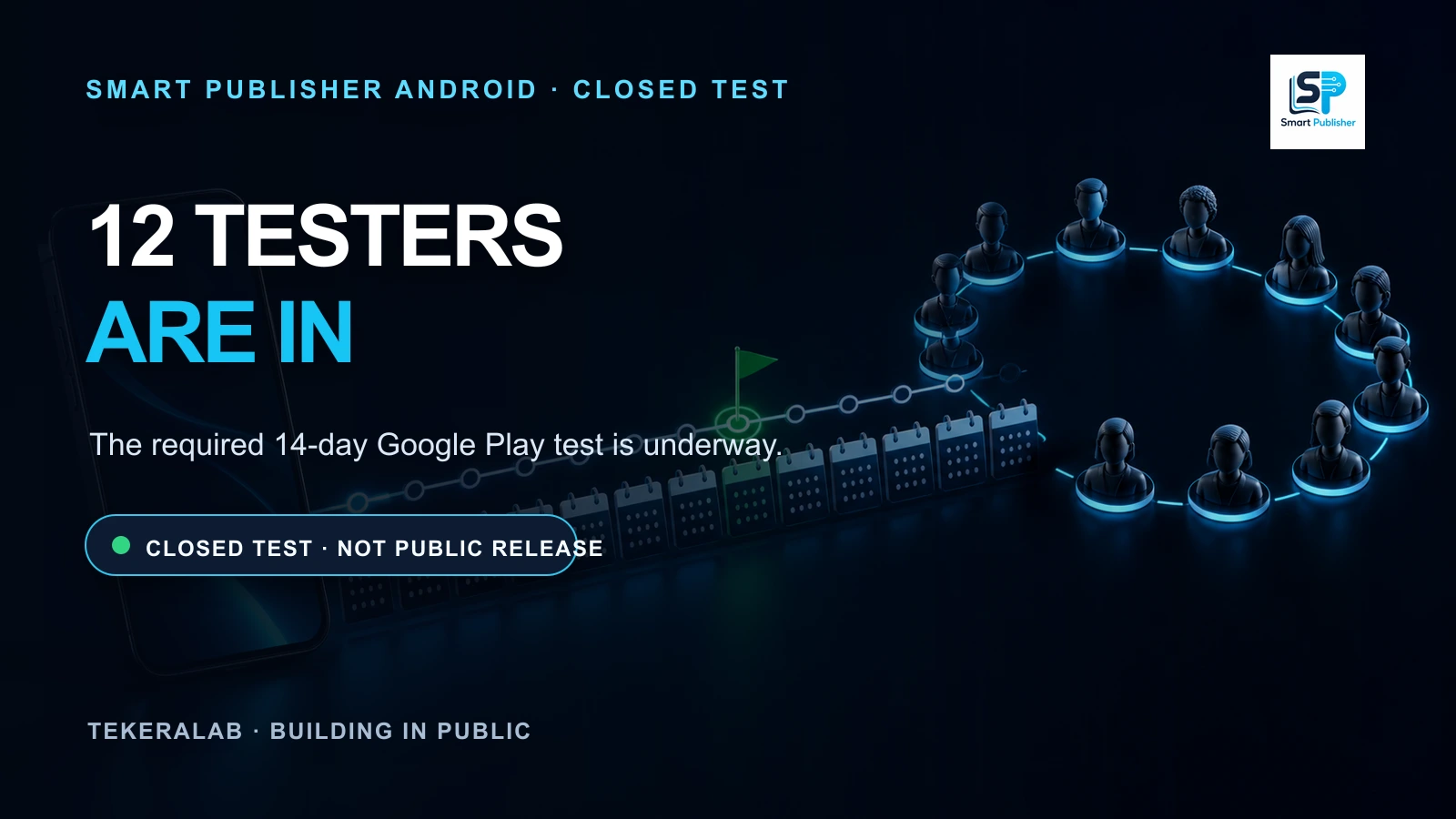
Smart Publisher Android Begins Its 14-Day Google Play Closed Test
Twelve testers are now opted in to Smart Publisher Android’s closed test. The required 14-day Google Play testing period is underway.